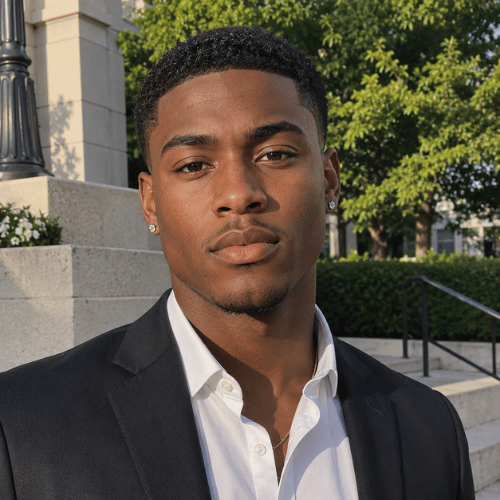
Russia released retired American teacher Stephen Hubbard as Trump envoy Steve Witkoff met Vladimir Putin in St. Petersburg, with the president saying no concessions were required to bring him home.

Russia released a retired American schoolteacher on Wednesday, a goodwill gesture timed to a new round of face-to-face peace talks between Vladimir Putin and President Donald Trump's envoy in St. Petersburg. Stephen Hubbard, 74, walked out of Russian custody after more than four years behind bars on charges he denied from the first day. The Kremlin got nothing in exchange, and Trump made sure the country heard it.
"Stephen is on his way back home and will soon be with his family," Trump wrote on Truth Social. "The United States, out of respect for President Trump, was not required to give anything in return -- an unprecedented situation for Russia."
The release lands as the administration presses Kyiv to accept a deal to end the war, a push that has drawn fire from Democrats and European allies who accuse the White House of tilting toward Moscow. Trump's answer is that the pressure is producing results no predecessor managed.
Hubbard, a Michigan native, was detained in Ukraine in 2022 and later convicted by a Russian court of fighting as a mercenary. The sentence ran nearly seven years. He rejected the charge throughout.
The State Department had designated him wrongfully detained, making him the last American in Russia carrying that classification. That label matters: it commits the U.S. government to pursuing a captive's release as a policy priority rather than leaving him to the ordinary consular process.
Trump said he raised Hubbard directly with Putin in a phone call last week and asked for his freedom. The Kremlin described the release as a gesture of goodwill, and the family credited the president rather than the courts.
"Our family thanks President Trump and his team for opening the dialog with Russia which led to this joyful day," the Hubbard family said in a statement. "Our family can attest that there are wonderful blessings to be found along the hard road to peace."
It is the second such homecoming of this presidency. Schoolteacher Marc Fogel, serving 14 years on drug smuggling charges, was brought back last year in a deal that also cleared a Russian cryptocurrency operator from U.S. custody. Hubbard's case was different -- no swap, no prisoner traded, no sanctions relief attached at the moment of release.
Steve Witkoff arrived in St. Petersburg early Wednesday and was met at the airport by Kirill Dmitriev, the Kremlin's presidential envoy for foreign investment and economic cooperation. The two men then sat down with Putin.
The envoy opened with flattery aimed squarely at the man across the table. "You talk so much about my president, President Trump, being a humanitarian," Witkoff told Putin. "You are a humanitarian also, sir."
Witkoff said the groundwork had been laid to end the fighting and that he carried documents outlining approaches to a possible deal. He also asked Putin to consider resuming trilateral talks, a format that would put the United States at the table alongside Russia and Ukraine rather than in the role of a outside broker passing messages.
Jared Kushner, the president's son-in-law and a veteran of the first term's Middle East diplomacy, was expected to join the session virtually.
The Putin meeting followed a round of talks in Oslo that brought Witkoff and his team together with Ukrainian President Volodymyr Zelenskyy, Norwegian Prime Minister Jonas Gahr Store and Finnish President Alexander Stubb. A U.S. official said Ukraine brought new ideas and that meaningful progress was made.
Zelenskyy told reporters afterward that a trilateral leaders' meeting was one of the important ideas raised in Oslo. He also said recent problems with intelligence sharing had been resolved. That matters on the battlefield, where Ukrainian commanders have complained about warning times before Russian strikes.
Secretary of State Marco Rubio called the Oslo session positive but added that nothing unexpected came out of it -- a deliberate lowering of expectations from a team that has learned how quickly peace talk headlines outrun peace talk substance.
Putin has not moved much. He insists any meeting with Zelenskyy can only happen once a deal is finalized, and only in Moscow, a condition Kyiv has rejected outright. His territorial demands still include the whole of Ukraine's eastern Donbas region. Ukrainian forces hold ground in that area and show no sign of handing it over.
The administration has spent weeks courting the Kremlin. Trump signed a diesel deal with Russia this month and waived new sanctions tied to the Graham Act, drawing bipartisan criticism on Capitol Hill. He argued Wednesday that the Hubbard negotiation would have come to a complete and total halt had he not waived those sanctions.
His patience with Kyiv is visibly thinner. "We want Zelenskyy to make a deal," Trump told reporters in the Oval Office on Tuesday. "We've given a lot to Ukraine. We've gotten absolutely nothing back except grief, death, tremendous monetary loss."
That framing is the core of the administration's case: that Washington has spent hundreds of billions for a war with no exit, and that only direct leverage on both capitals produces anything. Critics call it capitulation. Supporters call it the first serious attempt to end a war that had settled into a slaughterhouse.
The release of an American teacher is the kind of concrete win that argument needs. It also puts the earlier reporting on the Witkoff and Kushner peace plan into sharper relief, since the same negotiators are now working the same channels with a tangible result in hand.
The fighting has not paused for the diplomacy. At least nine civilians were reported killed across Ukraine on Wednesday as Russian forces stepped up strikes on energy infrastructure ahead of winter, and officials in Russia's Bryansk region said one person died in a Ukrainian strike.
Watch three things. First, whether Witkoff's trilateral proposal gets a Russian yes -- Putin's precondition of a finalized deal before any leaders' meeting remains the biggest obstacle. Second, whether the next prisoner case moves, since Hubbard's release leaves no American in Russia under wrongful detention status. Third, whether Congress treats the sanctions waiver as a temporary tool or a permanent surrender, because the bipartisan bloc that wanted the Graham Act enforced is not going away.
For now, one American is on a plane home, and the White House has a receipt to show for a strategy its critics said would produce nothing.


Russia released retired American teacher Stephen Hubbard as Trump envoy Steve Witkoff met Vladimir Putin in St. Petersburg, with the president saying no concessions were required to bring him home.

freedomlinedispatch.com