Russian security agents arrested Hokkaido Shimbun correspondent Yuki Imai in Sakhalin and flew him to a Moscow court, charging him with espionage as the Kremlin deepens its crackdown on foreign reporters.

Russian security agents have arrested a Japanese newspaper correspondent on espionage charges, flying him from the country's Far East to a Moscow court and ordering him held in pre-trial detention -- the latest case of the Kremlin using its courts to target journalists and punish countries it accuses of working against its war effort.
Yuki Imai, a reporter for the Hokkaido Shimbun newspaper, was detained in the Sakhalin region a day before he was scheduled to leave Russia. Russia's Federal Security Service (FSB) said he was acting on the instructions of Japan's national intelligence service and gathering information tied to Moscow's defense operations on the Kuril Islands, the disputed archipelago that sits between Hokkaido and Russia's Kamchatka Peninsula.
He has been remanded until Dec. 12, when his trial is expected to begin. A conviction on espionage charges in Russia can carry up to 20 years in prison.
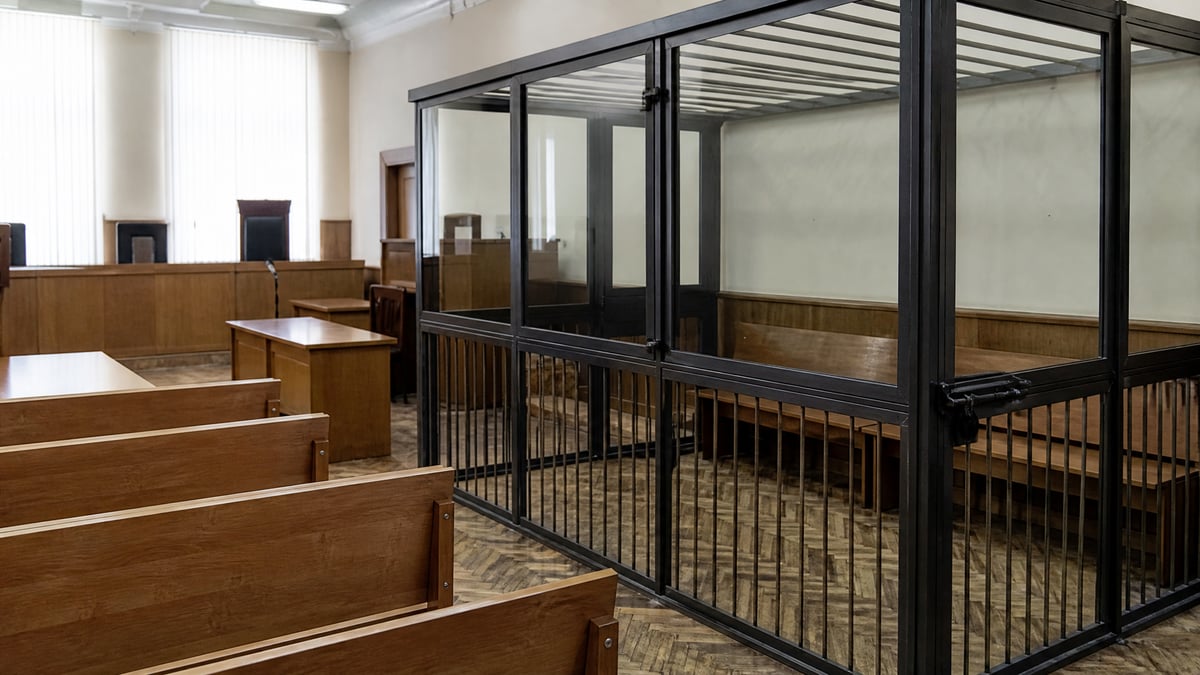
The FSB released footage showing masked men in black uniforms storming a hotel room and handcuffing a man, then escorting him onto a plane and into a glass-walled cage in a Moscow courtroom. Russian state media did not say when the detention or the court appearance took place.
The accusation follows a pattern American readers know well. Moscow's security apparatus has repeatedly handed espionage charges to foreign correspondents, branding routine reporting on its military as spying for hostile governments. The arrest lands as allied intelligence services sound the alarm over the Kremlin's widening campaign of sabotage and espionage, with Britain's MI5 branding Russia the West's number one aggressor as state threats reach Cold War levels.
Tokyo said it learned of the arrest only when Russia announced it. Chief Cabinet Secretary Minoru Kihara told reporters that Japanese officials had not yet been able to contact Imai and were still seeking details.
The Hokkaido Shimbun confirmed that the detained man was one of its reporters but did not name him in its own coverage. "We are still confirming the details. Ensuring the reporter's safety is our top priority," the paper said.
The charges center on the Kuril Islands, the archipelago Russia administers but which Japan claims as its Northern Territories. The long-running dispute is the main reason Moscow and Tokyo never signed a peace treaty after World War II.
The arrest is the latest friction point in a relationship already at its lowest ebb in decades. Japan's new prime minister, Sanae Takaichi, sharply criticized Vladimir Putin's first-ever visit to the islands, saying it "wounded the feelings of the Japanese people" and was "incompatible with Japan's consistent position on the Northern Territories." Moscow dismissed her remarks as "politically inappropriate" and "legally unfounded."
Russia has also pressed for the extradition of Tomoko Akane, the Japanese president of the International Criminal Court, who has been on Russia's wanted list since the tribunal issued an arrest warrant for Putin over war crimes in Ukraine. Japan has sanctioned Russia since the 2022 invasion.
Russia's foreign ministry spokeswoman, Maria Zakharova, called Tokyo's use of its correspondents to gather information aimed at undermining Russia's security "regrettable" and insisted "today's incident is not an isolated one" -- language that suggests more detentions could follow.
The case carries echoes of Evan Gershkovich, the Wall Street Journal reporter arrested on espionage charges in 2023 and sentenced to 16 years before his release in a 2024 prisoner swap, the largest exchange of detained nationals since the Cold War ended. In 2019, Russia detained a Kyodo News journalist in Vladivostok and ordered him to leave the country within 72 hours.
For Washington and its allies, the case is another reminder that the Kremlin treats press credentials as cover for spies and courts as instruments of leverage. Watch whether Tokyo escalates its response, whether Moscow grants consular access, and whether this arrest becomes another bargaining chip in the long-running exchange of detained foreign nationals.


Russian security agents arrested Hokkaido Shimbun correspondent Yuki Imai in Sakhalin and flew him to a Moscow court, charging him with espionage as the Kremlin deepens its crackdown on foreign reporters.
freedomlinedispatch.com