Three House Republican chairmen are pressing Homeland Security Secretary Markwayne Mullin to revoke COSCO's trusted-operator status at U.S. ports after reports that the Chinese state-owned fleet gathered military intelligence off American coastlines.

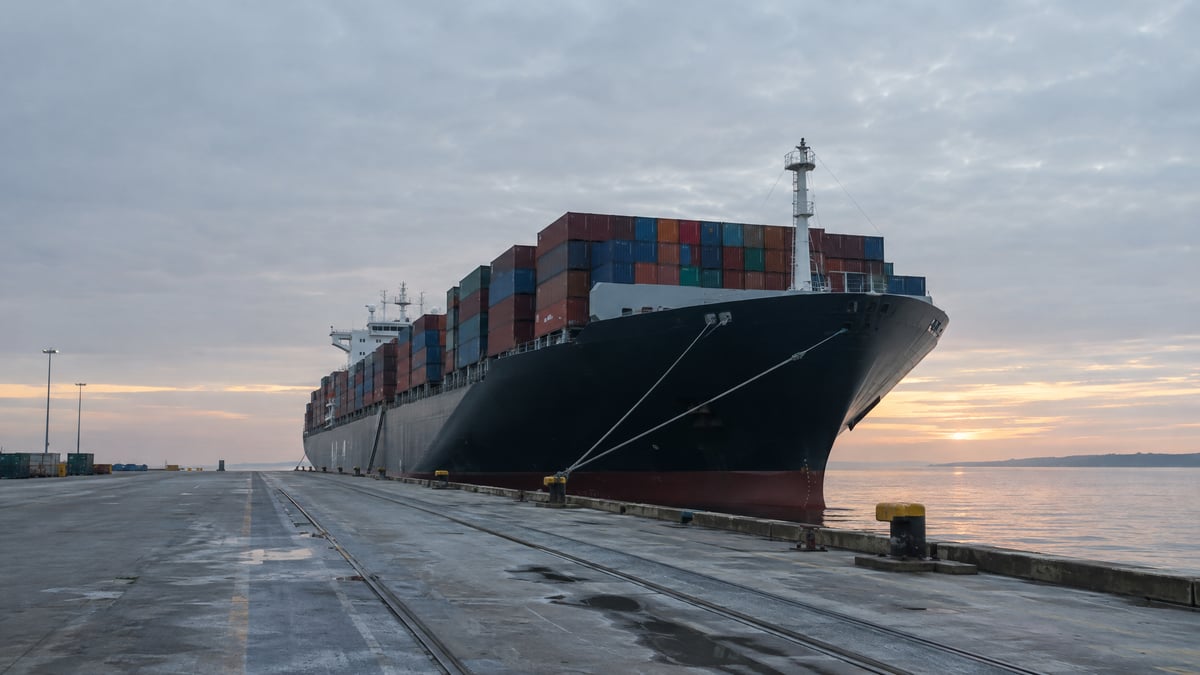
Three of Congress's top China hawks are demanding that the Department of Homeland Security cut a shipping giant owned by the Chinese Communist Party loose from special privileges at American ports, warning that its vessels have been used to spy on U.S. military communications.
House China Committee Chairman John Moolenaar, House Intelligence Committee Chairman Rick Crawford and Rep. Carlos Gimenez, who chairs the Homeland Security Subcommittee on Transportation and Maritime Security, delivered the demand to Homeland Security Secretary Markwayne Mullin in an Oct. 14 letter obtained by Fox News Digital.
The target is COSCO, one of the largest shipping companies in the world and a state-owned enterprise of the People's Republic of China, and its continued enrollment in a Coast Guard program that lets trusted operators skip most routine inspections when they enter U.S. ports.
As of July 15, 2026, the lawmakers wrote, 11 COSCO vessels were listed in the Coast Guard's Quality Shipping for the 21st Century program, known as Qualship 21, even though the Pentagon has designated the company a Chinese military enterprise.
Qualship 21 was built to reward vessels with strong safety and compliance records by reducing how often they face routine inspections in U.S. waters. Crews that run clean are supposed to get faster turnarounds than operators with a pattern of deficiencies.
The chairmen argue in their letter that COSCO's alleged espionage activities and its ties to China's military raise serious questions about why its ships have qualified for that trusted tier at all. Congress, they contend, never intended a state-owned arm of Beijing's defense apparatus to receive lighter scrutiny at American gateways.
The letter follows September reporting, attributed to two senior U.S. officials, that COSCO vessels used sophisticated and concealed equipment to intercept military communications and gather intelligence about encryption technologies off American coastlines.
Those allegations have fueled concern that Chinese commercial shipping can double as a fleet of listening posts, drifting within range of sensitive U.S. military facilities while wearing the cover of ordinary trade. A former Pentagon official has warned publicly that China effectively wiretapped the Red Sea using a spy hub roughly six miles from a U.S. base.
Analysts tracking Beijing's military footprint have documented the same pattern across the Indo-Pacific: satellite imagery has already captured light attack aircraft and armored vehicles at China's new base in Laos.
COSCO denies the allegations. The company has called them unfounded and insists its onboard communications and navigation equipment is used only for legitimate commercial purposes, adding that none of its systems were used to intercept military traffic or collect intelligence.
The Pentagon added COSCO to its Section 1260H list of Chinese military companies in January 2025, citing the company's ownership by a Chinese state agency, activities allegedly carried out on behalf of the People's Liberation Army, and its role in Beijing's military-civil fusion strategy.
That designation costs a company heavily in reputation, and it is supposed to shape how federal agencies treat the firm. The chairmen's complaint is that the Coast Guard's commercial programs have not kept pace with the intelligence community's assessment.
This is not the first time the same lawmakers have pressed the service. Earlier letters from the committee chairmen asked the Coast Guard to explain how it screens CCP-backed shipping operators inside the U.S. Marine Transportation System, including what vetting the vessels receive before they are granted favorable port treatment.
What has changed is the volume of evidence. Between a formal military designation and fresh reporting on signals collection off U.S. shores, the lawmakers now want the department to act on its own authority instead of waiting for new legislation.
American seaports sit next to some of the nation's most sensitive military infrastructure. Naval stations, submarine yards, missile ranges and defense contractors all operate within reach of shipping lanes that foreign-flagged vessels pass through every day.
A merchant hull is an ideal cover. It carries legitimate cargo, files ordinary manifests and draws little attention while its equipment quietly maps the electronic spectrum around a base. Detecting that collection after the fact is difficult, which is why the chairmen are focused on who gets a pass through the inspection gate.
Revoking COSCO's enrollment would not stop Chinese ships from calling at U.S. ports. It would, however, strip the company of a badge that signals to port officials that its vessels warrant less scrutiny, a status the lawmakers say Beijing's own military links should disqualify.
The decision now rests with Secretary Mullin and Coast Guard leadership, who can remove vessels from the program administratively without any vote in Congress.
Watch three things in the days ahead. First, whether the department responds publicly and whether COSCO ships come off the Qualship 21 roster. Second, whether other committees widen the push into a formal review of how foreign state-owned operators are screened. Third, whether the pressure grows into legislation barring Chinese military-designated firms from any federal trusted-operator program.
For a Congress that has spent the year tightening the screws on Beijing's economic and military reach, the COSCO letter is the latest front: an argument that the United States should at least stop awarding perks to the fleets it suspects of spying on it.


Three House Republican chairmen are pressing Homeland Security Secretary Markwayne Mullin to revoke COSCO's trusted-operator status at U.S. ports after reports that the Chinese state-owned fleet gathered military intelligence off American coastlines.
freedomlinedispatch.com