Republicans open the first midterm convention in party history in Dallas, with President Trump headlining both nights in a push to hold Congress and turn out the voters who powered his 2024 comeback.

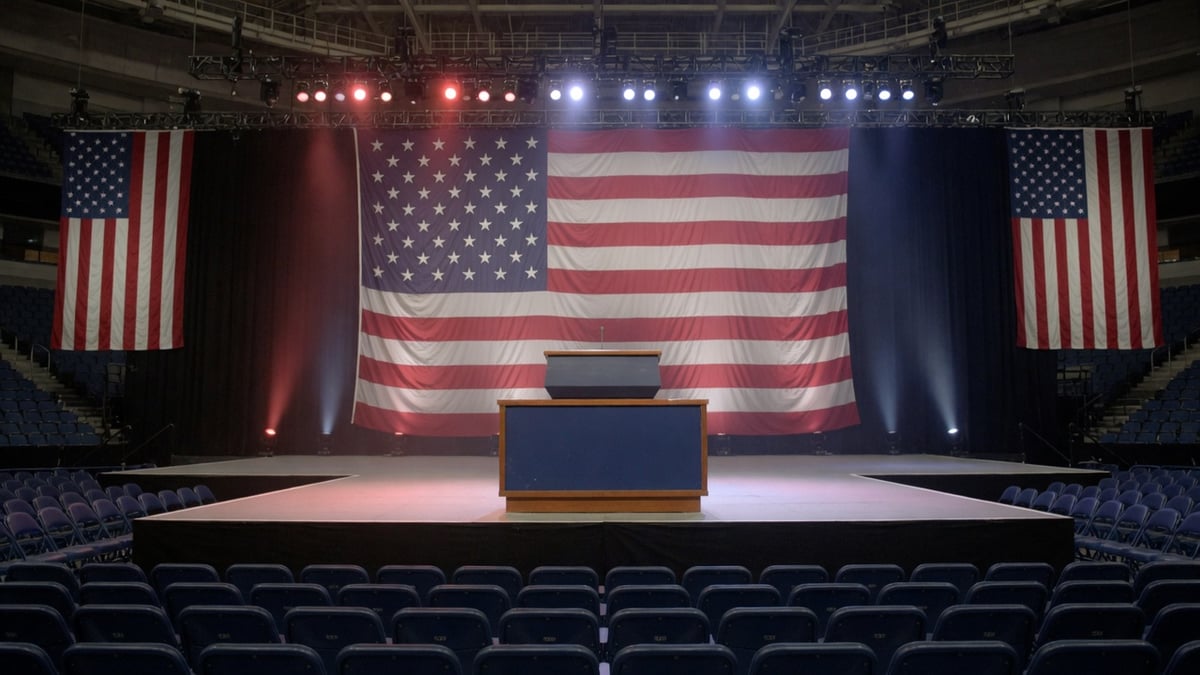
Republicans are making history in Dallas this week, opening the first midterm convention the party has ever held -- a two-night, made-for-TV showcase headlined by President Donald Trump that organizers have branded "Trumpapalooza." The gathering at the American Airlines Center is the GOP's answer to one of the oldest riddles in politics: how do you win an off-year election when your strongest vote-getter is not on the ballot?
Trump will be the star of both nights, delivering a keynote address Wednesday and closing remarks Thursday after Vice President JD Vance's own keynote speech. Organizers expect up to 20,000 attendees, including administration officials, Republican candidates, donors, and grassroots activists from across the country.
Political parties normally save their big conventions for presidential years, and for good reason -- midterm conventions simply are not a thing in modern American politics. Democrats experimented with so-called mini-conventions in the 1970s and 1980s, but those were small affairs focused on internal party business, and they were scrapped after a short run in 1982.
Republican National Committee Chairman Joe Gruters, who has been promoting the "Trumpapalooza" label since the event was announced, has described the convention as a "primetime showcase for President Trump's success, candidates, and causes" heading into November. More than 40 speakers are expected, including Health and Human Services Secretary Robert F. Kennedy Jr., Attorney General Todd Blanche, House Speaker Mike Johnson, Sen. Ted Cruz, and Donald Trump Jr.
The convention will spotlight the issues driving the GOP's midterm message: lowering the cost of living, raising incomes, securing the border, and protecting American values. Party leaders say the goal is to send Republicans back to their districts energized and armed with a unified pitch to voters.
Trump has been blunt about the logic behind putting himself at the center of the midterms. At a recent rally for a Senate candidate in South Carolina, he spelled out the theory in classic Trump fashion.
"The problem that we have is they say that Trump does great when he's on the ballot, but when he's not on the ballot, his people don't come and they don't vote," Trump said. "So, what I really want you to do is pretend please, that I am on the ballot. Just come and vote."
That message is aimed squarely at the low-propensity voters who powered Trump's 2024 comeback -- voters who often stay home when there is no presidential race at the top of the ticket. "Nobody turns out low propensity voters in Ohio like the president," said Ohio Republican Party Chairman Alex Triantafilou, who is using the convention to rally grassroots supporters and raise money for his state party.
The president's allies are already testing the approach on the airwaves. A Trump-aligned group, Securing American Greatness, began airing two midterm ads last week, both heavy on footage of the president and built around the argument that a vote for Republicans is a vote to keep Trump's agenda moving.
The timing is no accident. Republicans are defending narrow majorities in both the House and the Senate with less than two months until the November 3 election, and history is not on their side -- the president's party has typically lost ground in the first midterm of a new administration.
Not every Republican is sold on the strategy. Dozens of swing-district candidates have opted to skip the convention, and Senate Majority Leader John Thune is not listed among the speakers. But the White House sees the spectacle as an opportunity to make the case on a national stage. "The president and I can go and make the argument on national TV," Vance said at a press briefing last week. "We don't need a congressman in a tight race to be there in all cases."
Some strategists believe betting on Trump is the party's best play. "We've tried running away from the president in previous midterms and we almost always lose," said Terry Schilling, president of the American Principles Project, a conservative group. "Running to President Trump and defending his record, I think, is an interesting strategy and I think it is so interesting that it might just work."
The convention also puts a bright spotlight on one of the cycle's marquee races: Texas Attorney General Ken Paxton's Senate bid against Democratic state Rep. James Talarico. No Democrat has won a Senate race in Texas since 1988, but recent polls show a tight contest in a state the party considers a top pickup opportunity.
Dallas is also serving as the GOP's fundraising headquarters for the week. Trump is slated to appear at an RNC roundtable Wednesday with tickets priced at $250,000, plus $88,600 for a photo with the president. Vance's Thursday counterpart event runs $110,000 per attendee, a sign of how much donors are willing to spend for access in a state political operatives call the Republican Party's biggest ATM.
The RNC will broadcast both nights on its YouTube channel, and C-SPAN is airing the convention on television, radio, and YouTube. The one scheduling clash no one could avoid: Wednesday's kickoff goes head-to-head with the NFL season opener, a Super Bowl rematch between the Seattle Seahawks and the New England Patriots, with another primetime football game following Thursday night.
Democrats are not planning any convention of their own, leaving the GOP with the spotlight largely to itself.
The next two nights will test whether a Trump-centered convention can close the enthusiasm gap that typically haunts the party in power during midterms. The real verdict will not come until November 3, when voters decide whether Republicans keep control of Congress for the final two years of Trump's term.
Watch Trump's Wednesday keynote for the message he wants every GOP candidate in a competitive race to carry into the fall -- and whether "Trumpapalooza" becomes the template for how the party fights off-year elections from here on out.


Republicans open the first midterm convention in party history in Dallas, with President Trump headlining both nights in a push to hold Congress and turn out the voters who powered his 2024 comeback.
freedomlinedispatch.com