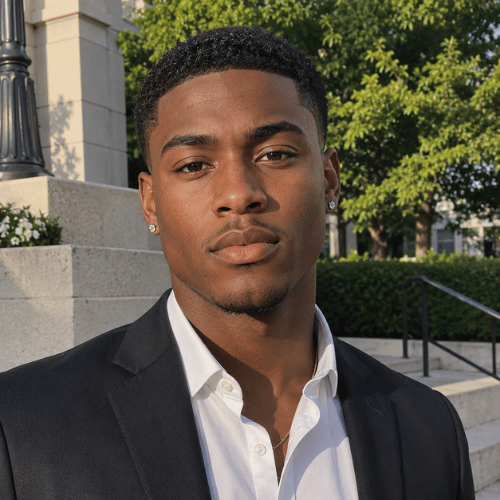
Byron Donalds beat David Jolly by 1.3 points to become Florida's first Black governor, and Ashley Moody held Marco Rubio's Senate seat, leaving Florida as the only big-state Republican anchor on a night Democrats swept Congress.

Republican Byron Donalds won the Florida governor's race on Tuesday, holding off Democrat David Jolly by about 1.3 points in the one large state where the Republican coalition stayed intact on a night Democrats took the House, the Senate and governor's mansions from Georgia to Texas.
Donalds, 48, becomes Florida's first Black governor and the first Black Republican ever elected to a governor's office in the United States. With 99 percent of precincts reporting, he led 4,132,275 votes to 4,024,554 -- 50.02 percent to 48.71 percent -- a margin of roughly 108,000 ballots out of more than 8.2 million cast.
The result keeps the governor's mansion in Republican hands and gives the party something it had almost nowhere else on election night: a statewide win it can point to without an asterisk.
Two years ago Ron DeSantis won reelection by 19.4 points. Trump carried Florida by 13 points in 2024. Donalds won by less than two, and he did it by running as the continuation of the DeSantis record rather than as a fresh start.
Jolly, 54, is a former Republican congressman who left the party in 2018 and registered as a Democrat last year. He campaigned on housing costs, property insurance and gas prices, and tried to make Donalds' ties to the data center industry the central issue of the race, tagging him as "data center Donalds." Bill Clinton headlined a fundraiser that brought in $3 million for the Democrat, and Barack Obama endorsed him.
The attacks did not break through far enough. Florida still has roughly 1.5 million more registered Republicans than Democrats, plus 3.3 million unaffiliated voters, and Donalds ran with a sizable financial advantage and the outgoing governor at his side. DeSantis campaigned for him across the state, and Donalds sold himself as a continuation of the DeSantis era while warning that Jolly wanted to undo it.
There was a national headwind, and it was real. Roughly half of House voters nationwide called the cost of living crucial to their vote, and gas prices tied to the eight-month war with Iran weighed on Republican candidates everywhere. In Florida, that wind blew hard enough to shrink a 19-point state into a two-point state. It did not blow the doors off.
Donalds was not the only Republican to survive the night. Sen. Ashley Moody, appointed to Marco Rubio's seat when he became secretary of state, defeated Democratic state Rep. Angie Nixon to serve the final two years of the term.
That combination leaves Republicans holding the governor's office, both Senate seats, every statewide constitutional office and supermajorities in both chambers of the Legislature. It is the same structure DeSantis built over eight years, handed to a governor who ran explicitly on preserving it.
Donalds comes to the job with an unusual resume for a statewide winner in either party. He was born in Crown Heights, Brooklyn, spent most of his career in finance, served two terms in the Florida House and two in Congress, and started his political life as a Democrat before leaving the party in 2010. He endorsed Trump early in the 2024 cycle, and Trump returned the favor with rallies in Fort Myers and Daytona Beach in the final days.
The primary was not a coronation. Donalds had to beat Lt. Gov. Jay Collins and former House Speaker Paul Renner in August, and he did it with the former president's endorsement as his loudest asset. His running mate, former state Sen. Bryan Avila, will be the next lieutenant governor. Jolly's running mate was former Rep. Gwen Graham.
Rubio spent the closing week of the midterms doing something a sitting secretary of state almost never does: appearing onstage at campaign rallies. Trump pulled him up in Texas on October 27 and again in Salina, Kansas, on Sunday night, where Rubio spoke for about 30 seconds about keeping American families safe and Trump told the crowd his chief diplomat "is getting too popular."
Rubio has not decided whether to run for president in 2028, and people close to his operation say he is keeping his options open. Vice President JD Vance leads hypothetical primary polling, though his advantage has narrowed since earlier this year. Rubio would have to resign from the State Department to run, because the Hatch Act bars federal executive branch employees from seeking partisan office. Vance faces no such barrier.
DeSantis leaves office in January with the state party intact and a national profile that has not faded, and he spent much of the final stretch of the race warning that his party was gaslighting voters on affordability and the cost of the Iran war. That warning now reads less like a concession speech and more like a marker for a future primary fight.
"The ones that would be first out are going to be the ones that are less likely to get Trump's support -- more like a Sen. Ted Cruz or a Gov. Ron DeSantis," said Terry Sullivan, who managed Rubio's 2016 presidential campaign. "If you can get the president's blessing or you currently work for the president, you're going to wait."
That is the shape of the Republican rebuild as of this week. Vance sits inside the administration. Rubio sits inside the Cabinet with one foot near the door. DeSantis sits in Florida with a term limit and a record. And Donalds now sits in the governor's office with the only fresh statewide win the party has to show for Tuesday.
Florida's economy is roughly $1.8 trillion, the 14th largest in the world, and growth has come with a price. Property insurance, housing costs and taxes have driven residents out of the state, and nearly seven in ten Florida voters called economic pressure and affordability their top concern in a September poll. Jolly's entire campaign was built on that number, and it came within 1.3 points of working.
Donalds has promised to continue the DeSantis policy stack: cooperation with federal immigration enforcement, a lean state budget, and resistance to mandates coming out of Washington. He introduced legislation this summer requiring data centers to generate their own power and water, a position that blunts the attack Jolly used against him and signals where his energy policy will start.
He also inherits a Legislature whose leaders have signaled they want more independence after eight years of a governor who set the agenda. And he inherits a Democratic Congress that has promised subpoenas, hearings and investigations of the administration Donalds just spent two years defending.
Watch three things from here. First, whether Donalds keeps Florida's immigration enforcement partnership with ICE fully intact as the new Congress tries to unwind it. Second, whether the Legislature moves on property insurance and property tax relief before the 2028 cycle begins. Third, whether a 1.3-point Florida win becomes the template for a national rebuild or the last red line on a map that is moving.
The blue wave broke at the state line. Florida Republicans will spend the next two years arguing about why, and the answer will shape who leads the party into 2028.


Byron Donalds beat David Jolly by 1.3 points to become Florida's first Black governor, and Ashley Moody held Marco Rubio's Senate seat, leaving Florida as the only big-state Republican anchor on a night Democrats swept Congress.

freedomlinedispatch.com