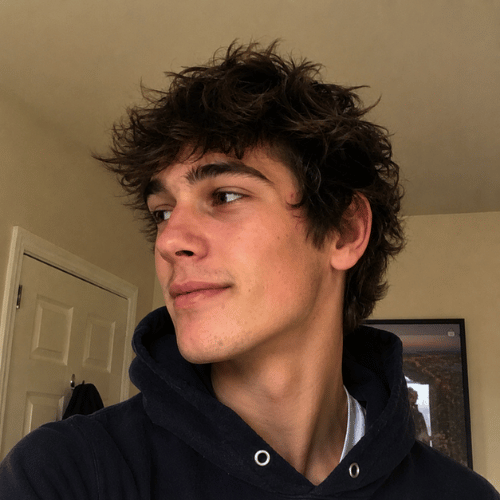
FBI Co-Deputy Director Andrew Bailey is leaving the bureau after roughly a year, returning home to Missouri and closing out a leadership experiment built to sharpen the nation's premier law enforcement agency.

The FBI's leadership bench is shifting again. Co-Deputy Director Andrew Bailey is stepping down after roughly a year in the job, a quiet exit that closes out one of the more unusual experiments in the bureau's recent history.
Bailey announced the decision Monday, saying he is heading home to Missouri to be with his family. He credited FBI Director Kash Patel, Attorney General Todd Blanche and President Donald Trump for the opportunity to serve at the top of federal law enforcement, treating the move as the end of a completed tour rather than a retreat.
The departure is neither a scandal nor a purge. It is the natural close of a chapter that began in September 2025, when Bailey traded a state attorney general's office for a role the bureau had never used before.
Bailey arrived at the FBI with a resume built in Missouri courtrooms, not in the bureau's field offices. He was installed as "co-deputy director," a title created to pair him with then-Deputy Director Dan Bongino in the second-ranking chair at headquarters.
The arrangement was designed to bring two different instincts to the same job. Bongino carried a background in federal investigations and a public voice that made him a known quantity to conservatives. Bailey carried a prosecutor's discipline, years of litigation against state and federal overreach, and an outsider's distance from the FBI's career bureaucracy.
Together they were expected to press the institution for speed, accountability and a harder line on public corruption, violent crime and organized criminal networks. The pairing gave Patel a leadership team that could push priorities out to the field without waiting on the bureau's usual consensus-building, and for a stretch it did exactly that.
The co-deputy model lost one of its two pillars in January, when Bongino left the FBI. Bailey stayed on, effectively running a post that had been designed for two people.
That fact explains a great deal about Monday's news. A job invented to divide a workload became a solo assignment, and Bailey's stated reason for leaving -- his family and his home state -- is the ordinary pull that eventually ends almost every Washington tour.
The bureau has cycled through senior leadership at a remarkable clip since Patel took the helm, and critics have treated every exit as evidence of dysfunction. The record points somewhere less dramatic: a leadership team brought in to change an institution, now leaving on its own terms after doing the work it came to do.
Bailey departs as the FBI is pointing to results rather than promises. Violent crime nationwide fell 9.3 percent between 2024 and 2025, violent crime arrests have climbed sharply, and arrests of violent gang members are up by nearly a third.
Patel took those numbers straight to senators at his annual oversight hearing on Capitol Hill, where he argued the bureau has delivered the most prolific run of crime reduction in its modern history. He pointed to disrupted terror plots, captured fugitives and a leaner internal process that lets field agents move faster than they did under the previous administration.
Bailey's own contribution is harder to see from the outside. As co-deputy, he was a manager and an enforcer rather than a case agent, and deputy directors rarely build public legacies. His tenure will be remembered less for a single headline than for the structural change it represented -- an outsider placed deliberately at the center of an agency famous for resisting outsiders.
Patel now has a vacancy to fill and a real choice about how he wants the deputy's office to look. He can turn to a career bureau veteran who knows the institution's machinery from the inside, or bring in another outsider to keep pressure on the bureaucracy.
The timing adds weight to the decision. The FBI is still absorbing a breach of its hiring portal that exposed questions about its own data security, and it has not finished settling the leadership churn that started when Bongino walked out the door.
There is also the calendar. With the midterms weeks away, congressional Republicans want an FBI that stays focused on violent crime, fraud and election integrity, and Democrats on the Judiciary Committee have made clear they intend to keep pressing the director. A steady hand in the deputy's chair matters for both fights.
For Bailey, the return to Missouri ends a brief but genuine turn in federal service. For the bureau, it is one more reminder that the people Trump and Patel installed to reform the FBI were never going to stay forever -- and that the job of holding those reforms in place now falls to whoever takes the chair next.


FBI Co-Deputy Director Andrew Bailey is leaving the bureau after roughly a year, returning home to Missouri and closing out a leadership experiment built to sharpen the nation's premier law enforcement agency.

freedomlinedispatch.com