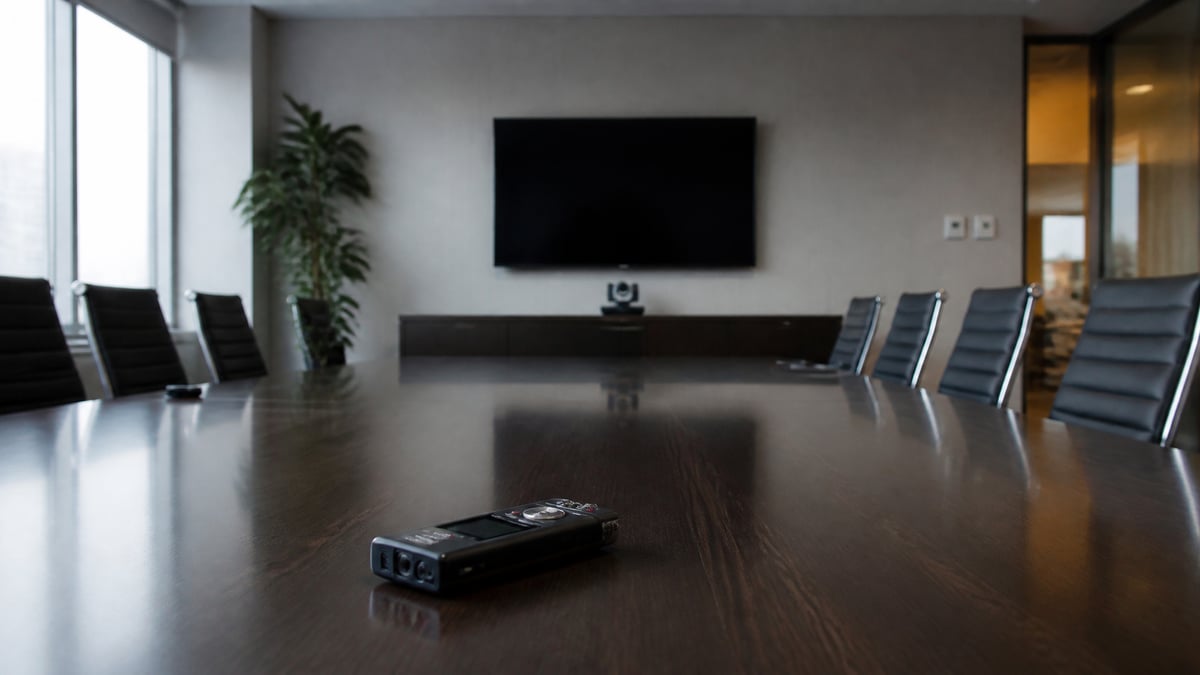
A Saudi national and OpenAI engineer faces federal charges after the FBI says he hid a recording device behind a television in a meeting room used for confidential strategy and government talks.

Federal prosecutors have charged an OpenAI engineer with planting a concealed recording device inside one of the company's most sensitive meeting rooms, a case that lays bare how aggressively foreign-linked actors are probing America's artificial intelligence industry. Abdulrahman Alfozan, 35, a Saudi national and legal permanent resident of the United States, was arrested by the FBI on Oct. 9 and appeared in a California federal court on Tuesday. He faces a charge of using or endeavoring to use a device to intercept oral communications.
The allegation is narrow on its face but heavy in its implications. The room at the center of the case is not an ordinary office. According to the federal complaint, it is where OpenAI discusses "highly confidential technical, commercial and strategic information," along with its government engagements and commercial relationships.
OpenAI staff discovered the device on Sept. 30. It had been wrapped in toilet paper and tucked behind a television inside the conference room. Alfozan, according to the complaint, had no authority to access that room or take part in the meetings held there.
What followed was a quiet, methodical counter-operation. The company placed a camera in the room. On Oct. 5, the same day the camera was rolling, Alfozan was filmed entering and appearing to look behind the television where the device had been hidden. He also left a bag unattended in a different room, the complaint says. When security staff opened it, they found a second recording device similar to the first, along with his wallet and identification.
Surveillance footage also placed him near the conference room on eight separate occasions during September, well before the device surfaced.
The complaint sketches a patient effort to find the right target and the right technique. Between Aug. 17 and Sept. 16, Alfozan asked a productivity AI assistant a series of questions about meeting rooms and their availability, including how external partners would be received and how to identify the day's meetings in a given room.
In September, investigators say, he turned to a chatbot tied to his spouse and asked how to build and install a recording device and how to reach it remotely. Alfozan had worked at OpenAI since July 2025 and, the complaint notes, had been educated in the United States before becoming a legal permanent resident in 2020.
There is an irony that will not be lost on anyone in Washington. He allegedly used AI tools to plan the bugging of an AI company. OpenAI said it turned to its own models to understand the device and trace where it came from.
The episode lands as federal investigators treat foreign intrusions into America's technology base as a top counterintelligence priority. That campaign has already produced high-profile actions, including the FBI's seizure of Chinese hacking platforms tied to intrusions on U.S. agencies. Now the target is not a network but a room where the country's most closely held AI work is discussed.
That is what makes the case bigger than one employee. America's lead in artificial intelligence is a strategic asset, one that rivals and hostile governments have every incentive to steal rather than build. Protecting it is not only a corporate security matter; it is a national one. Insider threats, foreign recruitment and the quiet placement of devices in rooms where policy and technology intersect sit at the center of that fight.
OpenAI moved to contain the damage, saying it had found no indications that the individual inappropriately accessed or exfiltrated model weights, source code or customer data. The company terminated his contract.
Alfozan's detention hearing is set for Oct. 19, when a judge will decide whether he remains in custody as the case proceeds. If convicted, he faces a maximum penalty of five years in prison and a $250,000 fine.
His attorney, William Pernik, said the allegations appear wholly out of character and urged the public to withhold judgment. "Mr. Alfozan is presumed innocent, and what has been made public is an accusation, not a finding of guilt," Pernik said. The FBI's investigation continues.
The question investigators will press is motive, and who, if anyone, was on the other end of the recordings. For a government that has made protecting America's AI edge a priority, the answers will matter far beyond a single courtroom in California.


A Saudi national and OpenAI engineer faces federal charges after the FBI says he hid a recording device behind a television in a meeting room used for confidential strategy and government talks.
freedomlinedispatch.com