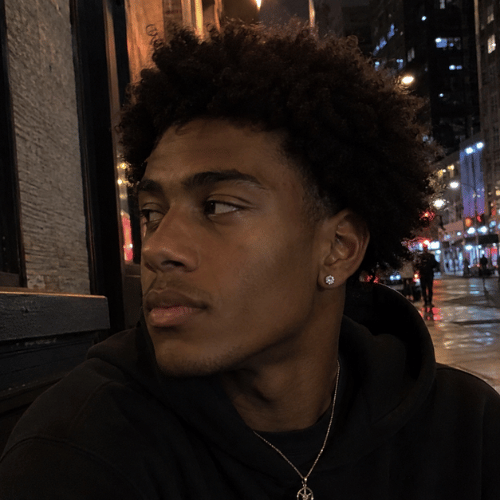
Three University of South Alabama students face federal charges of threatening President Donald Trump after social media posts surfaced ahead of his Mobile rally.

Three University of South Alabama students were arrested Friday on federal charges of threatening President Donald Trump, with their cases unsealed just hours before he took the stage for a midterm rally on the Mobile campus.
Amare Jemal Woods, Cameron Lamark Lewis and Kayla Leaann Smith each face one count of threats against the president, an offense that carries up to five years in prison. A federal magistrate judge ordered all three held pending a detention hearing set for Monday.
Investigators say the threats surfaced in social media sweeps conducted before the president's visit. Federal agents used emergency disclosure requests and information from University of South Alabama police to identify the students, according to the affidavits supporting the charges.
Trump's appearance at the Mitchell Center marked a return to the city where his first presidential campaign drew an early crowd in 2015. "It sort of all began here," he told the audience Friday night, recalling the earlier event.
The rally was not a university function. School officials said the Republican National Committee had rented the arena, and the president recognized Mobile County Sheriff Paul Burch and university President Jo Bonner from the stage.
Behind the scenes, local and federal authorities had been monitoring social media chatter about the visit for days. Burch said his office was assisting federal investigators as they tracked posts tied to the event.
The charging documents describe three separate threads of online activity. Woods, who used the handle "jemaltherealone," is accused of writing "he gotta die bro" on TikTok on Sept. 27 in a reply to a post about the planned rally.
Lewis, a philosophy major, allegedly made a veiled reference on X to last year's assassination of conservative activist Charlie Kirk. He suggested people would "remember the University of South Alabama the same way they remember Utah Valley University," the Utah campus where Kirk was fatally shot. The reference, investigators wrote, tied the campus visit to a killing that reshaped security planning for political events nationwide.
Smith, a student pursuing a degree in elementary education, is accused of replying to a Sept. 29 TikTok post with "We only got one chance let's take it," then attaching an image of a person miming the holding of a gun.
Federal prosecutors have moved quickly against social media threats aimed at the president, a pattern that has produced a steady stream of cases across the country, from an Ohio man charged over graphic death threats to indictments in several other states.
Jason Darley, an attorney for Woods, said the Secret Service treats threats against the president with zero tolerance, a posture that collided with the fact that his client was a student on the same campus. "The problem is that the president is on campus and Woods is a student," he said.
Darley argued that the statute is broad and does not require the person making a threat to have any real ability to carry it out. "If this kid is a threat, then everybody pecking on a keyboard is a threat," he said, adding that he does not believe any of the three posed a genuine danger.
He described Woods as an aerospace engineering student who recently graduated from a Mobile-area high school. He said the First Amendment may offer a defense, while acknowledging that courts read threat law strictly.
University of South Alabama officials said the alleged conduct crossed a line that free expression does not protect. "There is a clear line between exercising free expression and engaging in intimidation or unlawful conduct," the school said in a statement.
The university also stressed that the rally was not sponsored by the school, even as it hosted the event on its property. Officials encouraged open dialogue and civic participation while condemning threats directed at elected officials.
All three defendants remain in custody ahead of Monday's detention hearing, where a judge will weigh whether they stay jailed while the cases proceed. Each faces up to five years in prison if convicted.
The episode lands in the middle of a midterm season already shaped by arguments over political violence, campus speech and the reach of federal threat statutes. The president's rally went forward as planned, a signal that security planning increasingly treats online rhetoric as an operational risk rather than idle venting.
For the three students, the next step is a courtroom, not a classroom. Their cases will test how aggressively the government can treat a social media post as a federal crime within hours of a presidential visit.


Three University of South Alabama students face federal charges of threatening President Donald Trump after social media posts surfaced ahead of his Mobile rally.

freedomlinedispatch.com